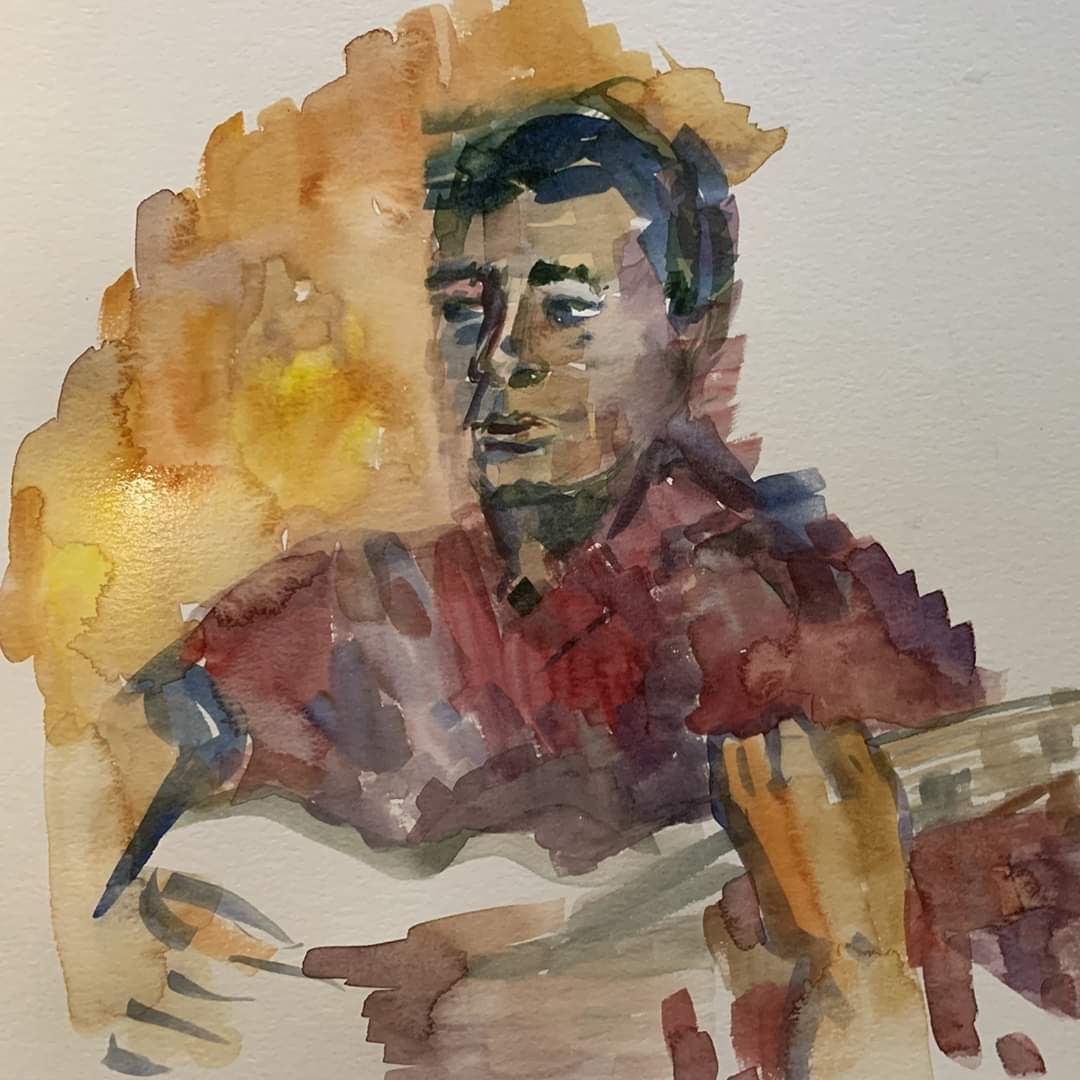
A constant theme in this space will be the lack of full names. Some characters simply don’t have a last name, others I never learned it, and a few more I withhold to protect the guilty. If someone is known enough to be recognized, they will be. If that makes the narrative less credible, so be it. This story could all be fiction for all I care.
The downside of anonymity, of course, is that potential long-lasting friendships in my life became ephemeral. Many people I met and came to like are mostly lost. During my days of incursion in the world of Zapatista solidarity, I got used to handling identifying information on a need-to-know basis, both for real security reasons and due to how paranoid people in these circles tend to be. The custom became a lifestyle.
During the time I spent in the community of La Realidad, in the jungle, I learned a lot from some dear friends I never saw again. Like Camila, the young Chilean whose family was related to the president murdered in the 1973 CIA-sponsored coup. Areti from Greece, Nikki from Switzerland, Heike from Germany, and Vanessa from Italy. I spent hours learning European songs of resistance every night with the latter four. We sang in Yiddish, German, Greek, Italian, and Piedmontese, and I speak none of them. We chased army patrols crossing the village twice a day in their daily intimidation routine. They made up a band name to call themselves, and I recorded some of our hits (I can only be heard singing in the Piedmontese song). Some of the “Grupo 6 de Abril” greatest hits are linked below.
We also faced more than one crisis together. The day we saw each other last, we didn’t even say goodbye. I think we debated for a while whether to sign off from each other formally, but La Jornada correspondent Jaime Aviles, who happened to be in La Realidad, offered his opinion: “In my years as a war correspondent, I spent hours saying goodbye to people I just kept seeing over and over again in different settings and then there were people I never said goodbye to who I never saw again.” I departed like any other time I went back to the city, not knowing it was my last visit.
Then there was Pina. She had the connections. She knew members of the congressional committee negotiating with the Zapatistas and got me to ride congressman Jaime Martinez Veloz’s SUV out of the jungle to San Cristobal on occasion. Those rides cut the travel time from about 6 hours to barely more than two and exchanged the bouncing box of a cattle truck for the spacious seats of a Suburban SUV. Pina sneaked me into the convent where Comandante Ramona was staying between doctor visits when she went to Mexico City for treatment. Pina was her chaperone. I can’t remember what I talked to Ramona about. I was impressed mainly by the fact that she was unbothered by my presence, combing her wet hair, no mask, as if we knew each other long ago. It was the Pina mantle of trust that covered me at that moment.
*****
The first time I participated in a caravan with humanitarian aid to the indigenous communities of Chiapas, I volunteered to accompany the cargo truck with the roughly 12 metric tons of grains, cans, clothes, and other donations.
I spent about five days sleeping over sacks of beans while getting familiarized with the old and windy roads from Mexico City’s Zocalo to the Don Bosco shelter in San Cristobal de las Casas. The truck broke twice, and when we finally reached our destination, Rafael, our coordinator, was furious at me “where were you? We were worried about the payload!” The truck driver, who I had never met before or after but with whom I got to spend almost a week, stepped up to my defense: “not only we had engine problems, but you also didn’t pay for toll roads. We came on the free roads. What were you expecting?” I became trustworthy again.
On that trip, I ended up with a group in the community of San Juan, in the canyonlands of the jungle, in an area called “La cañada de Patihuitz” alongside the Jataté river. I later found out that Rafael, a career educator, had chosen this village as his project, and he was about to recruit me as his liaison to the outside world as he prepared to move in full-time. That didn’t last, but what did last was the lesson from the trip. As a way of saying thank you, some of the Indigenous-Revolutionary Clandestine Committee (CCRI) of the Zapatista Army for National Liberation (EZLN) from the area came to thank the visit in a ceremony at the community center. The rest of the group took the opportunity to take pictures with them. I can’t remember the reason I didn’t participate in the shoots, probably because I didn’t bring a camera, but I was also probably busy with some tasks given to me by Rafael.
Later that night, drama unfolded. Bernardo, a young law student that was part of the group, was furious at the rest of the delegation. He was mad that participants wanted to know the names of the Comandantes who hosted us; he was angry they took pictures with them and was furious at what he generally accused as “protagonism,” a term used in our circles in those days to describe people desperate for attention. “You are taking pictures with the CCRI like you are at the zoo with a tapir!” he yelled at some point, “you have no respect for culture and norms; you only want your yearbook signed.” We cut the visit short the next day.
The day we arrived at San Juan, Rafael introduced us to a Belgian woman and a young Mexican man staying as peace observers in the village. The young man’s name was Gustavo, and he gave me a strong vibe of being related to me. He looked exactly as I remembered one of my first cousins from my father’s side, also named Gustavo, except I had not seen him since he was 13, and the guy in front of me was in his twenties. Then again, at least seven years had passed since the last time I saw him. I struck up a conversation several times, trying to get something from him, but every time, he was evasive like everyone else in those circles. After the drama, I dropped the issue. A decade later, running into my cousin’s parents at a family gathering, they mentioned Gustavo had spent months in Chiapas and eventually moved there. My aunt and uncle had even participated and traveled with the same group as I did, albeit in different years. “Was he in San Juan? In the cañada de Patihuitz?” I inquired. They just knew he was somewhere in the jungle. I still haven’t seen my cousin since he was a kid. I think he still lives in San Cristobal de las Casas, and I am not sure I will ever get to ask him.
I don’t know what happened with Rafael, but I saw Bernardo once on TV during the student-led strike of 1999 at Mexico’s National Autonomous University (UNAM), the year I moved to the US. He was an attorney working with the General Strike Council (CGH). I think it was right after the national police took over the premises of the UNAM and arrested hundreds of students. It seems he is a professor now.
*****
 Musings of Mexican Expatriate
Leave a comment